 Stark
Stark Deepfakes, AI, and Trust: Protecting Your Brand’s Digital Reputation
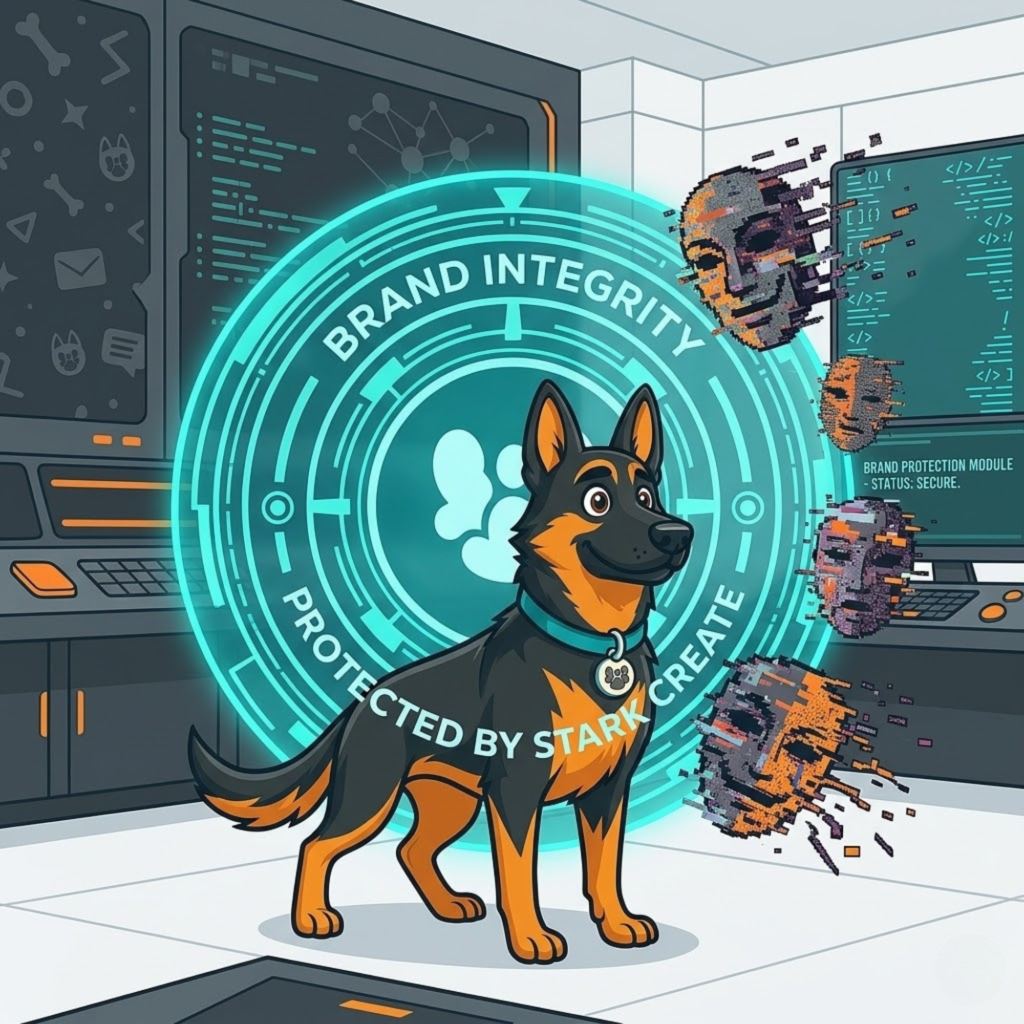
The technology to seamlessly clone a voice or manipulate a video is no longer restricted to Hollywood studios; it is freely available to anyone with an internet connection.
In an era where digital deception is easier than ever, proactively protecting your brand’s reputation and maintaining your customers’ trust is the ultimate competitive advantage.
For years, the idea of artificial intelligence impersonating human beings felt like a distant science fiction plot. But welcome to 2026. Today, generative AI tools, voice cloning software, and hyper-realistic deepfakes are everyday realities. While these advancements offer incredible opportunities for creative marketing and automation, they also present an unprecedented threat to business owners. Bad actors, scammers, and even unscrupulous competitors can now easily weaponize AI to create fake audio of a CEO authorizing a fraudulent wire transfer, or generate a deepfake video of a business owner making offensive statements.
At Stark Create, we have always prided ourselves on being the Guardian of Integrity for our clients. We know that it takes years of hard work, excellent service, and late nights to build a strong local reputation, but it only takes one viral, AI-generated lie to tear it all down. As the digital landscape becomes increasingly crowded with synthetic media, businesses can no longer afford to be reactive. You cannot wait for a crisis to strike before you start thinking about digital security. Protecting your brand’s digital house requires a proactive, multi-layered strategy that safeguards your identity and ensures your audience always knows they are dealing with the real you. It is time to stop hoping for the best and start putting a guard dog at the digital gate.
The 2026 Reality of Deepfakes and Voice Cloning
To protect yourself, you first have to understand the nature of the threat. In 2026, creating a deepfake does not require a master’s degree in computer science. With just a few minutes of high-quality audio or video—which most business owners already have publicly available on their websites, YouTube channels, or social media profiles—an AI program can map your facial expressions and synthesize your voice with terrifying accuracy.
Scammers use these tools to execute highly targeted attacks. We are seeing a rise in “synthetic phishing,” where employees receive a frantic voicemail that sounds exactly like their boss, demanding an immediate transfer of funds to a new vendor. Beyond direct financial theft, malicious actors are using deepfakes to create fake product endorsements, publish fabricated negative reviews from “real” people, or impersonate brand representatives to extort customers. The technology has outpaced the average consumer’s ability to detect what is real and what is fabricated, placing the burden of proof squarely on the shoulders of the business.
How Digital Impersonation Destroys Consumer Trust
Trust is the currency of the modern digital economy. When a potential customer visits your website or interacts with your social media, they are looking for a reason to believe in your promises. If a bad actor successfully impersonates your brand, the immediate financial loss is often secondary to the catastrophic loss of consumer trust.
When customers realize they have been interacting with a fraudulent account or a fake endorsement posing as your business, their confidence in your brand plummets. They begin to question the security of your digital infrastructure and the safety of their personal data. Even if you are the victim of the impersonation, the public relations fallout lands on your doorstep. Rebuilding that trust is a massive, uphill battle. In a market where consumers have endless choices, they will quickly abandon a brand that feels digitally unsafe in favor of a competitor who has clearly established their authenticity.
Proactive Shielding: Claiming Your Digital Real Estate
The first step in protecting your digital reputation is claiming and securing your digital real estate before someone else does. A common tactic for bad actors is to register domain names or social media handles that are just one letter off from your actual brand name, using them to launch impersonation campaigns.
You need to lock down your brand identity across all major platforms. Ensure your Google Business Profile is fully verified and actively managed. Register variations of your domain name and redirect them to your main site. Secure your brand name on every major social media platform, even the ones you don’t actively use, simply to prevent a scammer from setting up shop under your banner. By firmly planting your flag across the digital ecosystem, you shrink the surface area that malicious actors can exploit.
The Power of E-E-A-T and Verifiable Authenticity
Search engines and social media platforms are actively fighting the flood of synthetic media by prioritizing verifiable authenticity. This ties directly back to the E-E-A-T framework: Experience, Expertise, Authoritativeness, and Trustworthiness.
To protect your brand, you must clearly establish what your authentic voice looks and sounds like. Make your official website the single source of truth for all company announcements, promotions, and contact information. Utilize digital watermarks on your official videos and images. More importantly, educate your audience on how to verify your communications. If you have a newsletter, clearly state that you will never ask for sensitive payment information via an unexpected email. By training your audience to look for your specific authenticity markers, you turn your customers into an extended security team that can spot a fake from a mile away.
Educating Your Team Against Synthetic Phishing
Your brand’s reputation is only as secure as your least informed employee. As AI-powered social engineering attacks become more sophisticated, your internal team needs to be trained on the new rules of engagement.
Implement strict, non-digital verification protocols for any sensitive requests. For example, if an employee receives a voicemail or an urgent email from a “manager” requesting a sudden change in payroll or a wire transfer, there must be a mandatory secondary verification step—like a direct phone call to a known, pre-established number—before any action is taken. Teach your team that urgency is the primary weapon of a scammer. Creating a company culture where employees are encouraged to pause, question, and verify unexpected requests is your best defense against synthetic phishing.
Technical Safeguards: Securing the Perimeter
While human intuition is crucial, you also need robust technical plumbing to protect your digital house. Start with your email infrastructure. Implement DMARC, SPF, and DKIM protocols on your domain. These are essential email authentication methods that prevent spammers from spoofing your domain and sending fraudulent emails that look like they came directly from your company.
Additionally, invest in social listening tools. These software programs constantly monitor the internet and social media platforms for mentions of your brand name, alerting you instantly if a fake account pops up or a manipulated video starts gaining traction. The faster you can identify a deepfake or an impersonation attempt, the faster you can issue a public correction and work with platforms to have the malicious content removed.
Let Stark Create Be Your Digital Watchdog
Navigating the dark side of AI and digital security can feel overwhelming for business owners who just want to focus on serving their customers. You shouldn’t have to become a cybersecurity expert to run a successful local business. That is why having a dedicated Guardian of Integrity in your corner is so vital.
At Stark Create, we don’t just build beautiful, high-converting websites; we build fortified digital fortresses. We help our clients establish unshakeable digital authority, secure their technical infrastructure, and implement the proactive strategies necessary to keep their reputations spotless in an AI-driven world. If you are ready to stop leaving your brand’s trust to chance and want a team that will aggressively protect your digital presence, it is time to call in the big dogs. Visit our
page or give our team a call at
to discuss how we can safeguard your brand today.
Disclaimer: The information provided in this article is for educational and informational purposes only and does not constitute professional marketing, financial, or legal advice. Contact Stark Create for custom strategies and solutions tailored specifically to your business needs.