 Stark
The Developer’s Perspective: Writing Reliable Code That Business Owners Can Trust
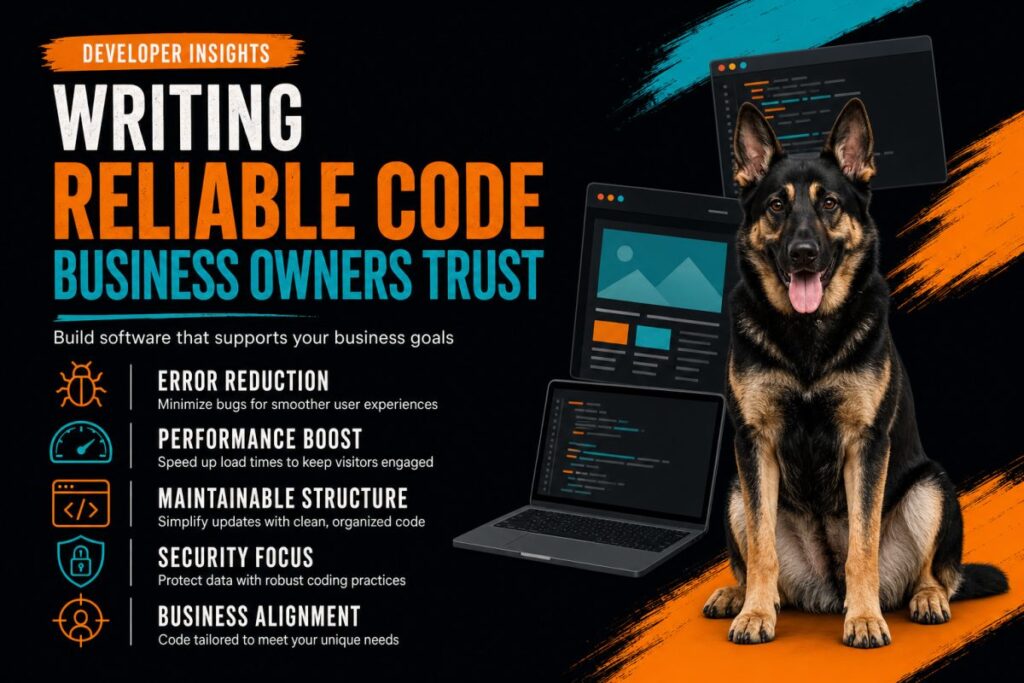
When it comes to your website or custom software, reliable code is more than just a technical detail — it’s the backbone of your entire digital presence. As a business owner, you want a site that works smoothly, adapts to your needs, and supports your growth without constant headaches. From the developer’s perspective, writing reliable code means applying disciplined practices that ensure your website stays secure, scalable, and easy to maintain. In this article, we’ll unpack what reliable code really means, how it benefits your business, and what you should expect from your development partner.
What Does Reliable Code Mean for Business Owners?
At its core, reliable code is software that consistently performs as expected, without crashes, bugs, or security gaps. For business owners, this translates into a website or application that:
- Loads quickly and functions smoothly for users
- Integrates well with other tools and plugins
- Is secure against cyber threats
- Can grow and evolve without costly rewrites
- Requires minimal emergency fixes or downtime
Reliable code reduces risk and improves customer trust — two essentials for any small or local business that depends on its online presence.
Key Developer Practices Behind Reliable Code
1. Clean, Well-Structured Code
Good developers write code that’s easy to read, understand, and update. This means using clear naming conventions, consistent formatting, and modular design. Clean code helps prevent hidden bugs and makes future enhancements faster and safer.
2. Thorough Testing and Debugging
Reliable code isn’t just written once and left alone. It undergoes rigorous testing — including unit tests, integration tests, and manual checks — to catch problems early. Developers also debug methodically, ensuring that every feature behaves correctly before deployment.
3. Security Best Practices
Security is a critical part of reliability. Developers implement safeguards against common vulnerabilities like SQL injection, cross-site scripting (XSS), and data leaks. Using secure coding standards and regularly updating dependencies keeps your site protected.
4. Documentation and Version Control
Proper documentation and version control (e.g., using Git) allow multiple developers to collaborate efficiently and track changes. This reduces errors and ensures that your website’s codebase remains stable even as it evolves.
How Reliable Code Benefits Your Business
Improved User Experience
When your website loads fast and functions smoothly, visitors stay longer and convert better. Reliable code minimizes glitches that frustrate users and cause lost sales or inquiries.
Lower Long-Term Costs
A well-built site means fewer emergency fixes and less technical debt. This saves you money on maintenance and keeps your budget predictable. Custom-built solutions tailored to your needs avoid costly workarounds common with off-the-shelf templates.
Stronger Brand Reputation
Your website is often the first impression potential customers get of your business. A reliable, secure site builds trust and reinforces your professionalism. Conversely, frequent errors or downtime can damage your reputation quickly.
Scalability and Flexibility
Reliable code is designed to grow with your business. Whether adding new features, integrating third-party tools, or expanding content, clean code makes updates smoother and less risky.
What to Look for When Choosing a Development Partner
Not all developers prioritize reliability equally. Here’s what to expect from a partner who truly values clean code and dependable solutions:
- Transparent Communication: They explain technical choices clearly and listen to your business goals.
- Customized Solutions: They build specifically for your needs instead of shoehorning you into cookie-cutter templates.
- Ongoing Support: They offer maintenance plans and rapid troubleshooting when issues arise.
- Proven Track Record: They share case studies demonstrating real-world reliability and performance.
- Commitment to Best Practices: They use testing, version control, and security standards as standard operating procedure.
Partnering with a development studio that builds with you — not just for you — ensures your website remains a reliable asset, not a source of stress.
Conclusion: Trust in Reliable Code for Your Business Success
Reliable code is the unsung hero behind every professional, high-performing website and custom application. It safeguards your investment, enhances user experience, and supports your growth without surprises. At Stark Create, we understand the business impact of dependable digital solutions. Our commitment to clean, tested, and secure code means you get a website you can trust — built collaboratively, maintained responsibly, and designed to scale with your ambitions.
Ready to move beyond templates and unreliable fixes? Let’s build your custom WordPress site or plugin with craftsmanship and care. Visit starkcreate.com to explore our services and start a conversation with our team today.