 Stark
Stark Why ChatGPT Won’t Save a Bad SEO Strategy (The Stark Reality)
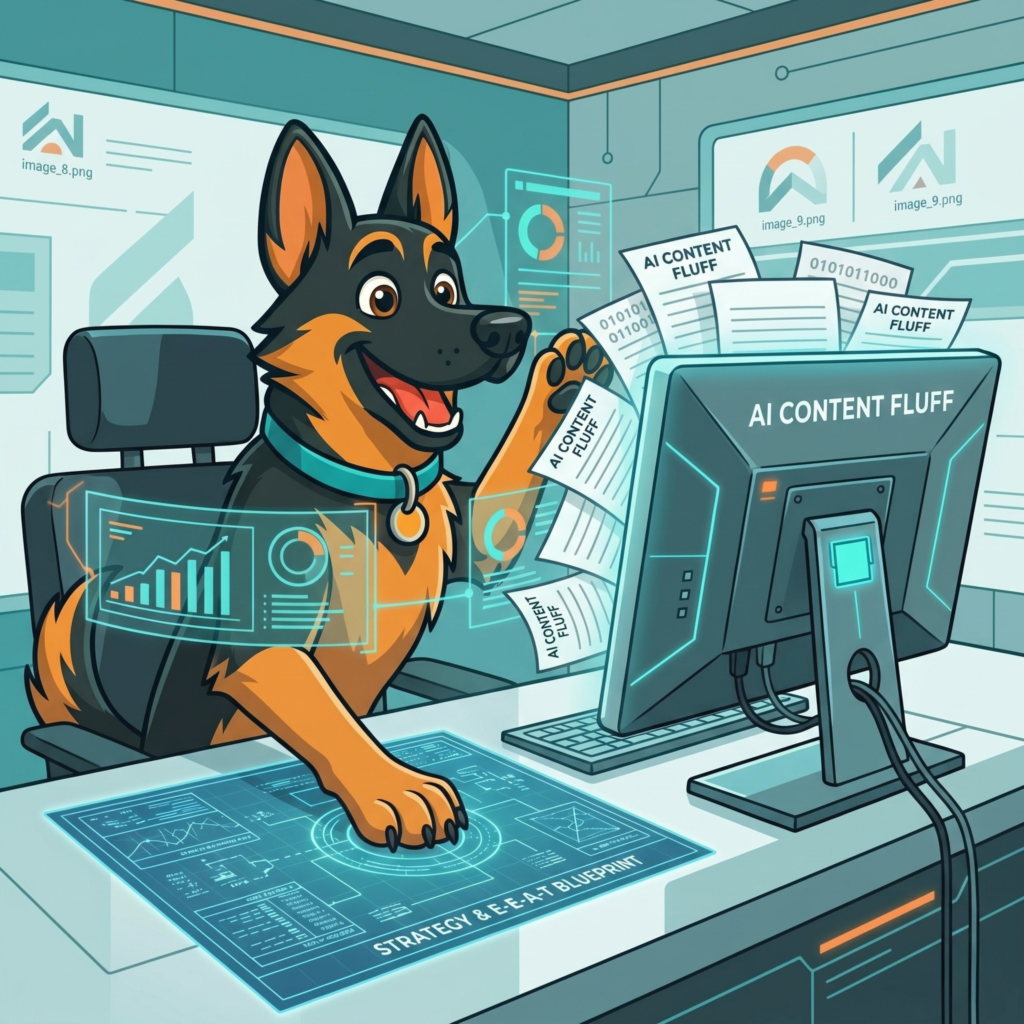
AI tools are revolutionizing content creation, but treating them as a magic bullet for search engine rankings is a dangerous mistake.
If your underlying website structure, user experience, and overall strategy are fundamentally broken, pumping out hundreds of AI-generated articles will only amplify the mess.
The digital marketing landscape has changed dramatically. As we navigate the complexities of 2026, the temptation to rely entirely on artificial intelligence is stronger than ever. Business owners are bombarded with promises that ChatGPT, Gemini, or Claude can instantly generate months of blog posts, fix metadata, and skyrocket their websites to the top of Google search results with a single prompt. It sounds like a dream come true, especially for small-to-medium businesses operating on tight budgets and even tighter schedules. However, this “push-button” approach to Search Engine Optimization is a massive trap. At Stark Create, we have seen countless businesses sink their digital presence by treating AI as a substitute for actual strategy. The stark reality is that AI is just a tool—a highly advanced hammer. But a hammer cannot build a house without a blueprint, a solid foundation, and an experienced architect to guide the construction. If your current SEO strategy is flailing, trying to rescue it by flooding the internet with robotic, mass-produced content is the digital equivalent of barking up the wrong tree.
The “Printing Press” Fallacy of AI Content
One of the most common misconceptions about modern SEO is that “more is always better.” Business owners assume that if they can use ChatGPT to publish ten blog posts a day instead of one blog post a month, their traffic will naturally increase tenfold. We call this the Printing Press Fallacy. While producing high volumes of content used to work in the early days of the internet, search engines have evolved far beyond basic word-matching.
In the era of AI search summaries and generative engine optimization (GEO), the web is already overflowing with perfectly optimized, grammatically correct content that no one actually wants to read. If you use AI to churn out generic 500-word articles that offer no unique perspective, no original data, and no real human insight, you are just adding to the noise. Google’s algorithms don’t just index content; they evaluate whether that content is genuinely helpful, trustworthy, and valuable. Pumping out low-quality AI content will not save you; in fact, it is the fastest way to get your website flagged as spam and buried on page ten of the search results.
Google’s 2026 Reality: E-E-A-T is the Ultimate Watchdog
To understand why ChatGPT can’t save a bad strategy, you have to understand what search engines are actually looking for in 2026. Google relies heavily on a framework known as E-E-A-T: Experience, Expertise, Authoritativeness, and Trustworthiness. This is the ultimate watchdog of search rankings.
When a user asks a question, Google wants to serve an answer written by someone with real-world, hands-on experience in that subject. AI, by definition, has no experience. ChatGPT has never installed a roof, defended a client in court, or managed a pediatric dental clinic. It simply aggregates and synthesizes information that already exists online. If your website only publishes AI-synthesized summaries, you are offering zero “Information Gain”—a metric search engines use to determine if an article brings anything new to the conversation. To win at SEO today, you need human-driven strategy. You must inject your brand’s unique point of view, original case studies, customer testimonials, and subject matter expertise into everything you publish. AI can help you draft the sentences, but the
soul
of the content must come from you.
Technical SEO: The Foundation AI Can’t Build
Even if you somehow manage to prompt ChatGPT into writing a masterpiece, it won’t matter if your digital house is falling apart. Content is only one pillar of SEO. The technical foundation of your website is equally, if not more, critical to your success.
AI cannot magically fix a chaotic site architecture. It cannot compress your massive image files that are dragging your load times down to a crawl. It cannot repair broken internal links, fix mobile usability issues, or ensure your site passes Core Web Vitals checks. Furthermore, as search engines shift toward Agentic SEO—where AI agents browse, book, and buy on behalf of users—your website needs flawless structured data and schema markup to communicate directly with these bots. If your website takes four seconds to load, has confusing navigation, and lacks structured data, all the ChatGPT content in the world won’t convince Google to rank you above a faster, cleaner, more accessible competitor.
The Stark Difference: Human Strategy Over Robotic Fluff
A bad SEO strategy usually stems from a lack of direction, poor technical health, or a fundamental misunderstanding of the target audience. ChatGPT cannot diagnose these root causes. It will happily execute a flawed command, creating content for the wrong audience or targeting vanity keywords that don’t actually fetch real business.
This is where the “Guardian of Integrity” steps in. At Stark Create, we know that true digital success requires a holistic approach. We don’t just generate content; we audit your entire digital footprint. We look at the data to understand where your customers are getting stuck, what questions they are really asking (which we often find in unconventional places like Reddit), and how we can position your brand as the definitive authority in your space. We build the strategy first, ensuring every piece of content, every meta tag, and every technical fix serves a larger, intentional goal.
Using AI as a Tool, Not a Crutch
Does this mean we are anti-AI? Absolutely not. When used correctly, AI is an incredible asset for SEO. It excels at tasks like clustering keywords by intent, analyzing massive datasets, formatting structured data, and outlining content briefs. The secret to success in 2026 is using AI as a highly efficient prep cook, while relying on human experts to act as the head chef.
AI should handle the structure and the repetitive technical heavy lifting, but humans must handle the soul, the voice, and the final quality assurance. If you rely on AI to do the thinking for you, you will lose your brand voice and blend into the sea of robotic fluff. But if you use AI to amplify an already strong, human-led strategy, you become unstoppable.
Stop Chasing Your Tail and Fetch Real Results
If your organic traffic is dropping and your phone isn’t ringing, don’t look to a chatbot to save your business. You need a comprehensive, custom-tailored strategy that addresses both the technical health of your website and the authentic value of your content. Let us help you sweep away the inefficiencies of bad marketing practices and replace them with clear solutions that work.
Ready to stop treating AI like a magic trick and start implementing a strategy that actually drives revenue? Visit our
page or call the Stark Create team at
today. Let’s build a digital presence that works as hard as you do.
Disclaimer: The information provided in this article is for educational and informational purposes only and does not constitute professional marketing, financial, or legal advice. Contact Stark Create for custom strategies and solutions tailored specifically to your business needs.