 Stark
Stark Why Google Maps is Your Real Digital Front Door
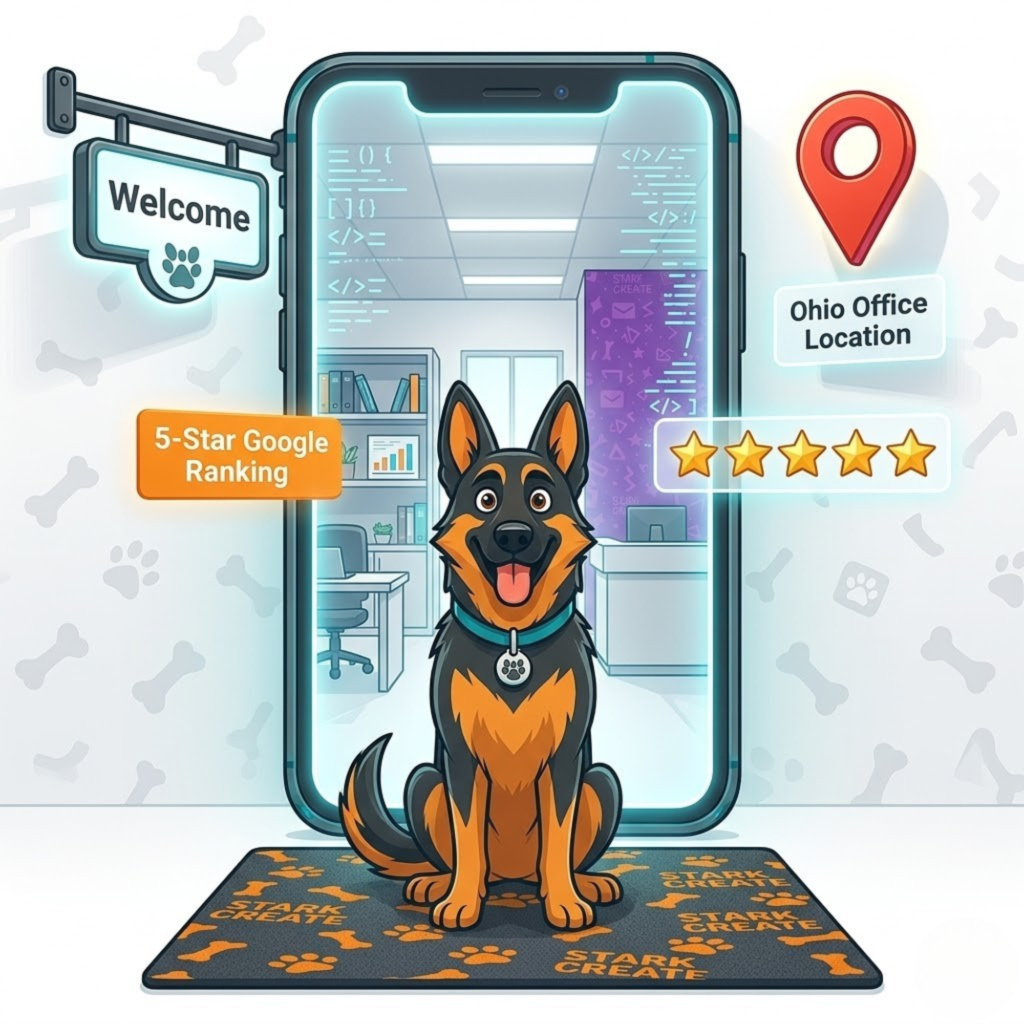
For years, businesses treated their website homepage as the grand entrance to their brand, but consumer behavior has fundamentally shifted.
Today, the vast majority of your local customers are making their purchasing decisions directly inside Google Maps, making it your true digital front door in 2026.
Think about the last time you needed a plumber, a cup of coffee, or an emergency vet. You didn’t sit down at a desktop computer, open a web browser, and read through five different company “About Us” pages. You pulled out your smartphone, opened Google Maps (or the standard Google search app, which heavily integrates Map results), typed in your need, and looked at the top three results. You checked their star ratings, quickly scanned their hours to see if they were open, and hit the “Call” or “Directions” button. You likely never even visited their actual website.
This is the reality of the 2026 digital marketing landscape. Yet, we still see so many bad actors in the agency world selling massive, expensive website design packages while completely ignoring the client’s Google Business Profile (GBP). Having a beautifully organized website is still incredibly important for deeper conversions and building authority, but if your Google Maps presence is a disorganized mess, that beautiful website is like a stunning mansion hidden behind a locked gate on a dirt road. No one will ever find it. At Stark Create, we believe in sweeping away the inefficiencies of outdated marketing practices. It is time to stop barking up the wrong tree and recognize that for local and service-area businesses, your Google Maps listing is where the real first impressions are made.
The Rise of the “Zero-Click” Local Customer
The digital marketing industry has been tracking a phenomenon called the “zero-click search” for years, and in 2026, it is the dominant way people interact with local businesses. A zero-click search occurs when a user finds the exact answer they are looking for directly on the search engine results page, completely eliminating the need to click through to a website.
Google Maps is the ultimate zero-click engine. The platform is designed to keep users within its own ecosystem by providing every piece of relevant information upfront. A potential customer can read your menu, view photos of your past projects, check your holiday hours, read dozens of reviews, and even send you a direct message—all without ever leaving the Maps app. If your business relies on foot traffic or local service calls, your Google Business Profile is doing the heavy lifting of lead generation. If that profile is incomplete or inaccurate, you are losing business to the competitor down the street whose digital front door is wide open and welcoming.
Visual Appeal: Curb Appeal for Your Digital House
In the physical world, “curb appeal” matters. If your storefront has burnt-out lights, a peeling sign, and trash on the sidewalk, people will walk right past it. The same psychology applies to your Google Maps listing. Your photos are your digital curb appeal.
Many businesses make the mistake of claiming their Maps listing and then letting Google automatically populate the images using outdated Street View captures or low-quality photos uploaded by random users. This is a massive missed opportunity. To fetch better results, you must actively manage your visual presence. Upload high-resolution photos of your pristine storefront, your branded vehicles, your smiling team members, and your best-completed projects. In 2026, Google also heavily favors short-form video content within the Maps ecosystem. A quick, 15-second welcome video from the owner can instantly establish trust and humanize your brand, making you stand out in a sea of faceless competitors.
The Trust Engine: Why Reviews Are Make-or-Break
Your Google Maps listing is not just an informational directory; it is a highly visible, public trust engine. In the age of AI and synthetic content, consumers are incredibly skeptical. They rely heavily on the real-world experiences of their neighbors to validate their purchasing decisions.
We frequently see businesses with incredible real-world reputations suffering online because they have a 3.4-star rating based on a handful of negative reviews from five years ago. When a user sees that low rating on the Map, they immediately scroll past. It doesn’t matter if your actual service is top-notch; perception is reality on Google Maps. Managing this aspect of your digital front door is non-negotiable. You need a proactive strategy to generate positive reviews from happy customers constantly. Equally important is how you respond to them. Replying to all reviews—especially the negative ones—with a calm, professional, and helpful tone shows future customers that you care about their experience. It is a massive trust signal that algorithms and humans both reward.
SEO in 2026 is Map Optimization
Traditional SEO focuses on optimizing your website for specific keywords, but local SEO is entirely about optimizing your Google Business Profile. Google’s local algorithm looks at three primary factors: Relevance, Distance, and Prominence. While you can’t change your physical distance from the searcher, you have complete control over your Relevance and Prominence.
To increase your relevance, your GBP must be exhaustively detailed. You cannot just pick one primary category and call it a day. You must select all accurate secondary categories, meticulously list your specific services, and populate the “Products” tab if applicable. Even service-based businesses like plumbers or roofers should use the Products tab to highlight their specific service packages. Furthermore, you should utilize the Q&A section to preemptively answer common customer questions, naturally seeding localized keywords into your profile. By providing this dense, structured data, you become the most relevant answer when Google decides who gets to appear in the coveted top three Map results.
Guarding Your Listing from Digital Vandals
Here is a stark reality that many business owners don’t realize: anyone can suggest an edit to your Google Maps listing. A malicious competitor or a disgruntled former employee can easily click a button and suggest that your business is “Permanently Closed,” that your phone number has changed, or that your hours are different. If you are not actively monitoring your account, Google might accept these user-generated edits, effectively boarding up your digital front door without you even knowing.
This is where the Stark Create “Guardian of Integrity” mentality truly shines. Protecting your digital real estate is just as important as building it. Your Google Business Profile requires constant vigilance. You need to log in regularly to reject incorrect user edits, update your holiday hours so customers aren’t left standing outside a locked physical door, and ensure that your brand’s integrity remains uncompromised.
Stop Chasing Your Tail and Open the Door
Treating your Google Maps listing as an afterthought is one of the most expensive mistakes a local business can make in 2026. It is no longer just a digital phonebook; it is a dynamic, interactive storefront that drives immediate, high-intent traffic directly to your business.
You don’t have to navigate these constant algorithmic changes alone. At Stark Create, we specialize in transforming neglected Map listings into high-converting digital front doors. We handle the optimization, the review management strategies, and the ongoing protection of your profile so you can focus on running your business. If you are ready to stop losing local leads to your competitors and want to give your online presence a serious pup-grade, it is time to take action. Visit our
page or call us at
to discuss how we can help you fetch real, local results.
Disclaimer: The information provided in this article is for educational and informational purposes only and does not constitute professional marketing, financial, or legal advice. Contact Stark Create for custom strategies and solutions tailored specifically to your business needs.